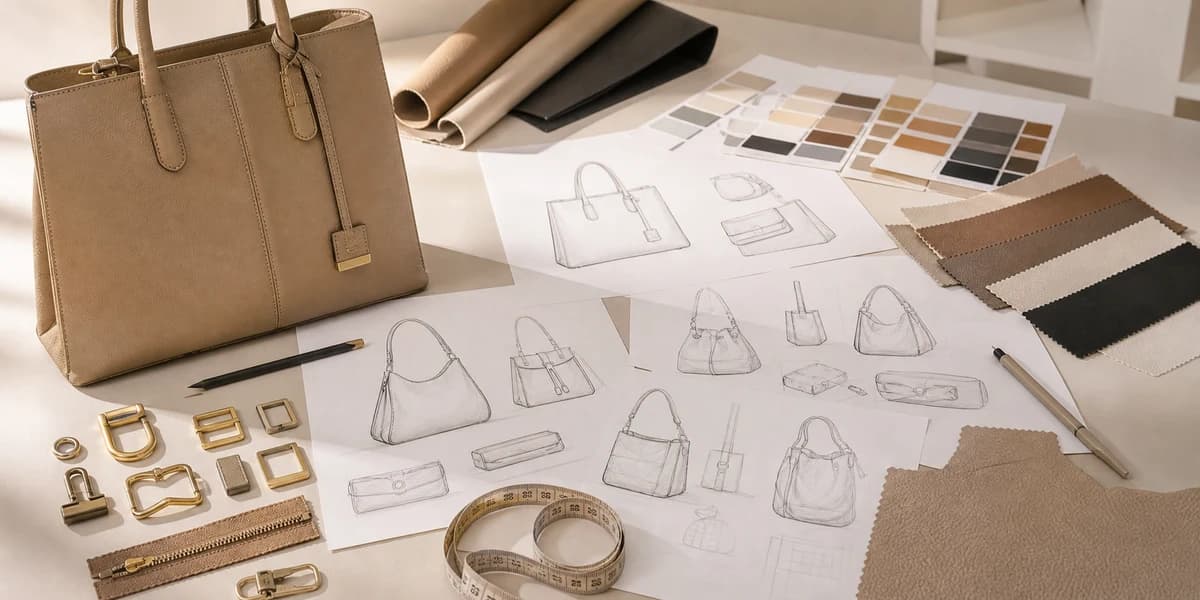
OEM and ODM are common terms in handbag sourcing, but buyers often use them differently. Understanding the difference helps you communicate clearly and get better production suggestions.
What OEM means for handbags
OEM usually means the buyer already has a design, sketch, reference sample, or tech pack. The supplier helps develop and produce the bag according to those requirements, including material, size, logo, hardware, lining, and packaging.
What ODM means for handbags
ODM usually means the supplier provides an existing design direction or development base that the buyer can customize. This can be useful for new brands, online sellers, or buyers testing a new category.
When OEM is better
OEM is better when brand identity, product structure, and design details are already clear. It gives stronger control over the final product, but it usually requires more preparation before quotation.
When ODM is faster
ODM can be faster when the buyer wants to start with proven shapes or practical factory suggestions. It may reduce sampling time and help buyers compare materials, colors, and logo options more quickly.
What to send before asking for a quote
Whether you choose OEM or ODM, send your target bag type, reference style, dimensions, quantity, material preference, logo method, and target price. This avoids vague quotations and saves time.
Recommended next pages
Browse Product Categories
Choose tote bags, shoulder bags, crossbody bags, wallets, backpacks, and more.
Review Materials
Compare leather textures, lining, zipper, hardware, color cards, and logo options.
OEM/ODM Process
See how reference styles become sample development and production plans.
Send Requirements
Share your product type, quantity, country, material, logo, and target market.