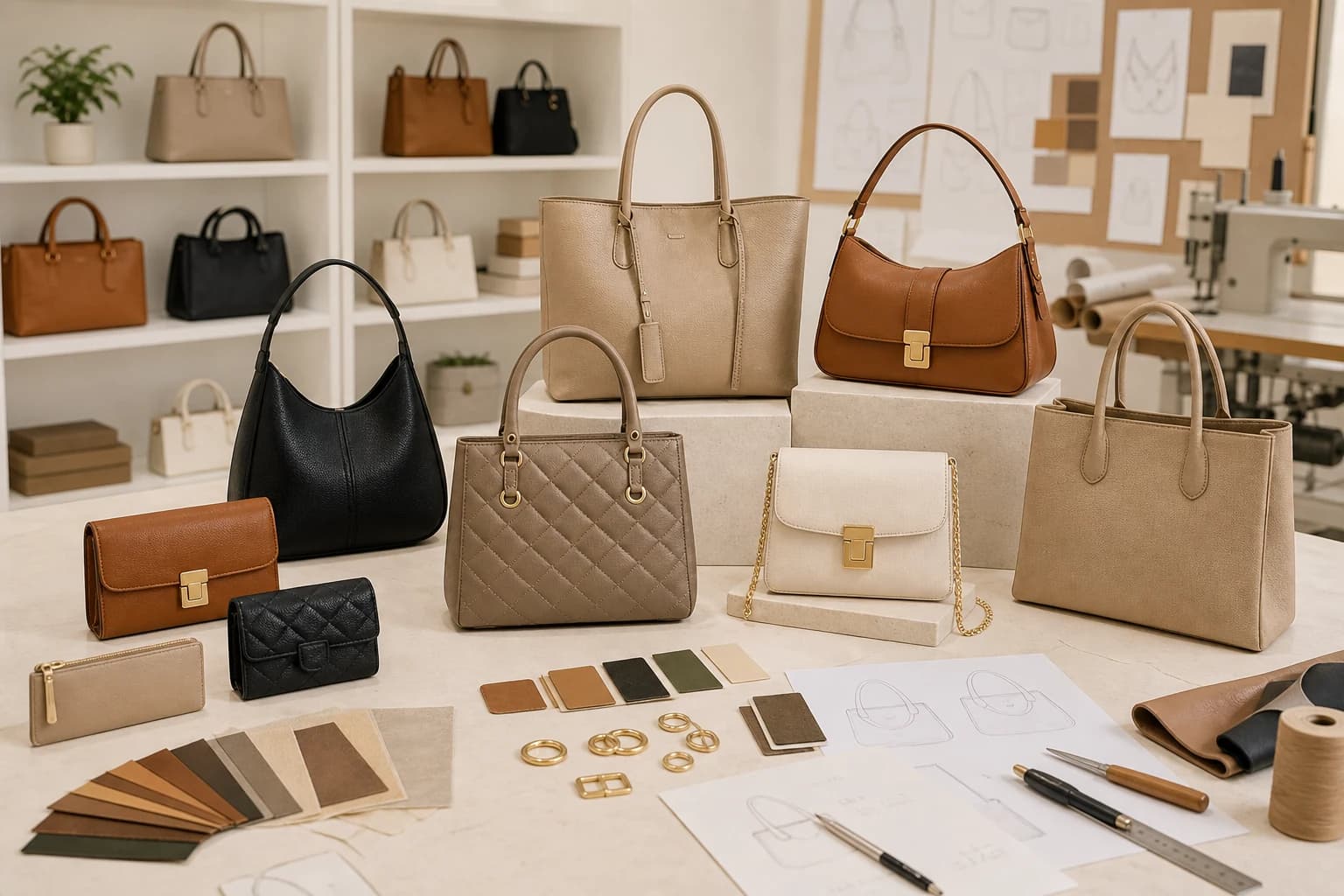
MOQ is one of the first questions buyers ask when sourcing custom handbags. The real answer depends on product structure, material availability, logo method, color planning, hardware, and packaging requirements.
Why handbag MOQ is not one fixed number
A simple tote, structured shoulder bag, wallet, backpack, and custom shopping bag can all require different production planning. Factories consider material purchase quantity, cutting efficiency, hardware minimums, logo setup, and packing materials before confirming MOQ.
Material and color affect MOQ
Stock materials and popular colors may support more flexible quantities. Custom colors, special textures, vegan leather requests, or imported material directions can require higher material minimums before sampling or bulk production.
Logo method can change the starting quantity
Embossing, metal logo plates, woven labels, printing, custom zipper pullers, and hangtags each have different setup requirements. Buyers should confirm the logo method early because it affects both sample cost and bulk MOQ.
How new brands can start more safely
New brands can often begin by choosing practical existing shapes, stock material colors, and simple logo methods. This reduces development risk and helps the buyer test demand before building a more complex custom collection.
What to send when asking for MOQ
Send reference photos, target product type, approximate size, material direction, logo method, packaging request, delivery country, and expected quantity range. This helps the supplier explain the MOQ instead of giving a vague number.
Recommended next pages
Browse Product Categories
Choose tote bags, shoulder bags, crossbody bags, wallets, backpacks, and more.
Review Materials
Compare leather textures, lining, zipper, hardware, color cards, and logo options.
OEM/ODM Process
See how reference styles become sample development and production plans.
Send Requirements
Share your product type, quantity, country, material, logo, and target market.